Choosing smart glasses suppliers in 2025 can seem hard. You want more than just new technology. You need a partner who knows what you need. They should give you products you can trust. If you follow steps, you can avoid mistakes. Some mistakes are forgetting comfort, not thinking about easy controls, or missing software compatibility.
Many groups make these mistakes:
Forgetting if the glasses are easy to use and control.
Not thinking about how comfy or safe the glasses are for eyes.
Using smart glasses with software that does not work for AR.
Use this guide as a checklist. Make sure your supplier meets all your needs.
Key Takeaways
-
Know what you need before you look for suppliers. Think about things like comfort, battery life, and how the smart glasses connect. This will help you pick the right smart glasses.
-
Check out suppliers very carefully. Find companies that people trust. Look for good customer reviews and the right certifications. This makes sure you get safe and good quality products.
-
Try out samples before you buy a lot. This lets you see if the smart glasses feel good and work well. You can also check if they work with your devices.
-
Look at how the supplier helps and talks to you. Pick a supplier who gives good technical support. Make sure they have clear service rules so you feel safe.
-
Compare how much things cost and how you pay. Know all the costs before you choose. This helps you make a smart choice and save money.
Define Your Smart Glasses Needs
Identify Key Features
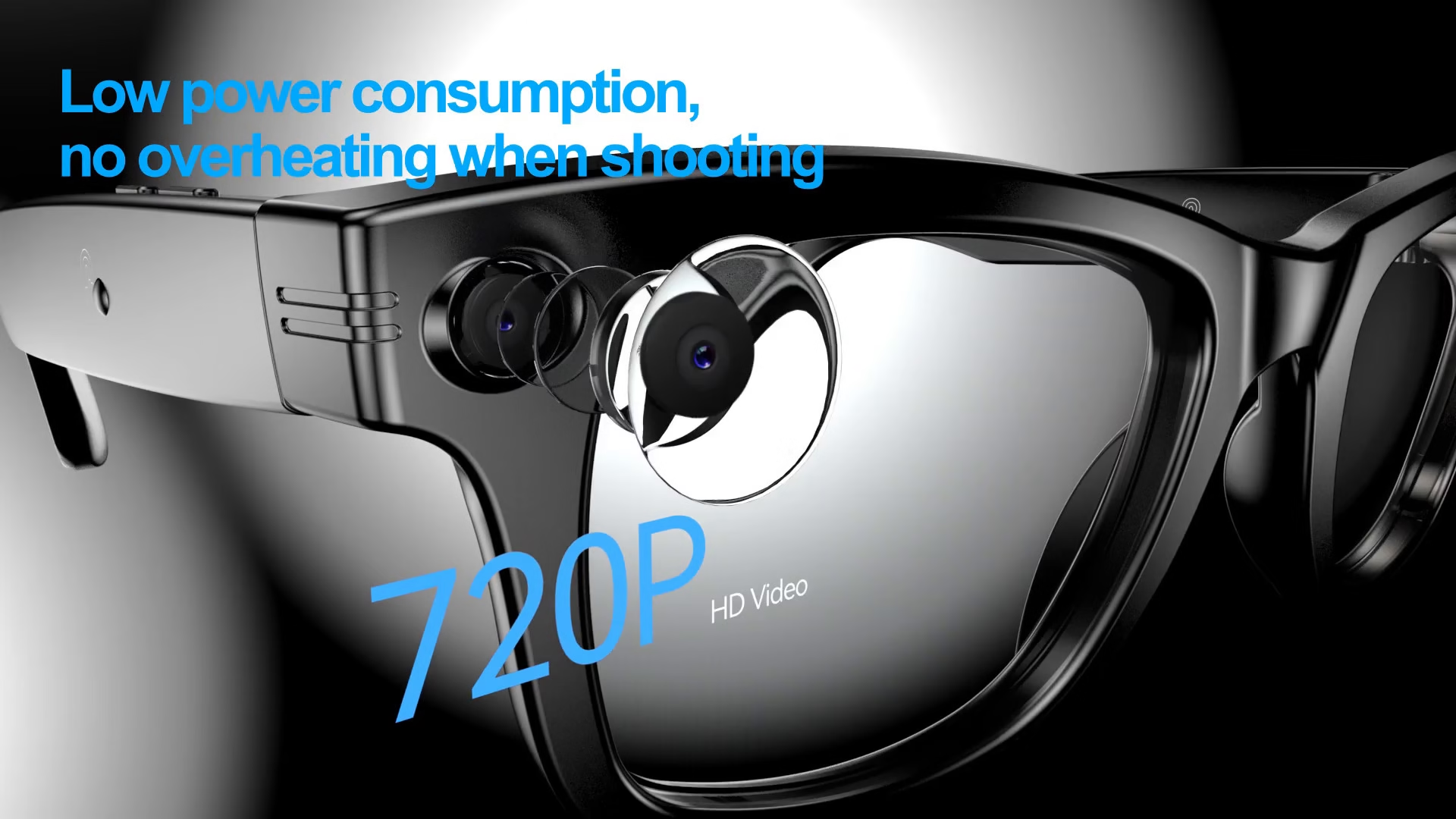
Before you look for smart glasses suppliers, think about what you need. In 2025, people want smart glasses that are light and easy to wear. They also want better optics and longer battery life. Some people want glasses that connect to their phone or computer. Many users like audio features, AI tools, and AR or VR experiences. Here are some top features people want:
-
Lightweight design for all-day comfort
-
Clear and improved optics
-
Long battery life
-
Easy wireless connectivity
-
Built-in audio for calls and music
-
Smart AI functions
-
AR and VR support for immersive tasks
If you want the newest features, look for micro-display technology and strong batteries. These upgrades make smart glasses work better and easier to use.
Set Budget and Quantity
Decide how much money you want to spend and how many pairs you need. Prices for smart glasses in 2025 can be very different. Here is a quick look at the average price ranges:
|
Category |
Price Range |
Key Features |
|---|---|---|
|
Entry/Lightweight |
US$100–US$300 |
Basic audio, simple AR, good for sports and travel |
|
Mid-End Consumer |
US$300–US$800 |
Micro-OLED display, light office work |
|
High-End Consumer/Prosumer |
US$800–US$2,500 |
Wide view, strong processing, great for creators |
|
Enterprise/Professional |
US$2,500+ |
Advanced mapping, tough build, works with business software |
|
Average Range by 2025 |
US$600–US$1,500 |
Good displays, strong support, fits most needs |
Think about your budget and how many smart glasses you want before talking to suppliers.
Define Use Case
Smart glasses can help with many jobs. You should know how you will use them. For example, doctors use smart glasses to track health data. Factory workers use them for step-by-step guides. In warehouses, they help find items quickly. Here are some common uses:
|
Industry |
Use Case Description |
|---|---|
|
Healthcare |
AI-powered health tracking and monitoring |
|
Manufacturing |
Assembly help and defect checks |
|
Logistics |
AR for finding items and managing inventory |
|
Remote Training |
Sharing what you see for training and problem-solving |
|
Maintenance |
Real-time help with equipment manuals |
Knowing your use case helps you choose the right smart glasses.
Check Compatibility
You want your smart glasses to work with your other devices. Most top models in 2025 support systems like MentraOS or other platforms. These systems let you use live captions, translation, and smart notifications. Here is a quick look:
|
Operating System |
Supported Hardware |
Features |
|---|---|---|
|
MentraOS |
Even Realities, Vuzix, Mentra |
Live captioning, translation, notifications |
|
Third-party OS |
Even Realities G1, Vuzix Z100 |
Many apps and integrations |
Check if the smart glasses you want will work with your phone, computer, or company software. This step saves you time and problems later.
Tip: Write down your must-have features, budget, use case, and compatibility needs. This list will help you talk to smart glasses suppliers and find the best fit.
Research Smart Glasses Suppliers
Find Reputable Suppliers
You want to work with smart glasses suppliers you can trust. A good supplier has a strong reputation and a history of happy customers. Look for companies that have been in the smart glasses industry for many years. For example, HYQ has over 10 years of experience making smart glasses. This kind of track record shows they know what they are doing.
When you check out suppliers, use this table to spot the best ones:
|
Criteria |
Description |
|---|---|
|
Certifications |
Suppliers should have important certifications like FCC or CE to keep you safe and legal. |
|
Communication |
Fast and clear replies show the supplier cares about your needs. |
|
Non-pushy Sales Approach |
The best suppliers want a long-term partnership, not just a quick sale. |
|
Openness to Discussion |
Good suppliers like to talk about features and restocking, showing they value your business. |
If a supplier checks these boxes, you can feel more confident about working with them.
Use Trade Shows and Referrals
You can find smart glasses suppliers in many ways. Trade shows are a great place to meet suppliers face-to-face and see the latest smart glasses. Here are some big events where you can meet top suppliers:
|
Trade Show Name |
Location |
Year |
|---|---|---|
|
GRT/Tropical CE Adventure Summit |
St. Lucia |
2026 |
|
Heart of America Eyecare Congress |
Kansas City, MO |
2026 |
|
Eyewear Design Week |
New York, NY |
2026 |
|
Vision Expo |
Orlando, FL |
2026 |
|
Optometry’s Meeting / 5th World Congress of Optometry |
Phoenix, AZ |
2026 |
You can also use online directories or ask for referrals from people you trust. These sources help you find suppliers who already have a good name in the smart glasses world.
Shortlist Based on Experience
After you find a few smart glasses suppliers, make a shortlist. Pick the ones with the most experience and the best reviews. Suppliers who have made smart glasses for many years know how to solve problems and keep up with new trends. They can help you get the right smart glasses for your needs. Always choose suppliers who show they care about quality and customer service.
Tip: Take your time to research. The right supplier will make your smart glasses journey much smoother.
Evaluate Supplier Credentials
Review Certifications
You need to make sure your smart glasses are safe and high quality. Look for certifications that prove the supplier meets important rules. These certifications help keep you safe and make sure your smart glasses work well. Here is a table with some common certifications you should look for:
|
Standard |
Description |
|---|---|
|
CE |
European Conformity |
|
FCC |
Federal Communications |
|
RoHS |
Hazardous Substances |
|
ISO 9001 |
Quality Management |
|
ETL |
Electrical Testing |
|
REACH |
Chemical Safety |
If a supplier has these certifications, they care about safety and quality.
Assess Manufacturing Quality
You want your smart glasses to be strong and last a long time. Ask the supplier how they make their smart glasses. Do they check quality at every step? Do they follow strict rules when building smart glasses? Some suppliers, like HYQ, use ISO-certified steps. This means they follow high standards. It helps you get smart glasses that are safe and work well.
-
Ask if the supplier tests each pair before sending them.
-
Find out if they use tough materials for the frames and lenses.
-
Check if their factory is clean and up-to-date.
Tip: Good manufacturing means you will have fewer problems later.
Check Track Record
A supplier’s past can tell you a lot. Look for smart glasses suppliers with a good history. You want a company that has made smart glasses for many years and has happy customers. Some top suppliers have customer ratings as high as 4.6 out of 5.0. This means they keep their promises.
-
Read what other buyers say in reviews.
-
Ask for real stories or examples from users.
-
See if the supplier has won any awards or special honors.
When you check these things, you can feel better about your choice. You want a partner who will help you and make sure you get the most from your smart glasses.
Compare Smart Glasses Features

Analyze Technical Specs
When you look at smart glasses, you want to check the technical details first. Think about what matters most to you. Do you need waterproof glasses for outdoor use? HYQ smart glasses have an IPX6 rating, so you can wear them in the rain or during sports. Battery life is another big deal. Some smart glasses last all day, while others need charging after a few hours. Look for wireless audio features if you want to listen to music or take calls hands-free. Blue light protection and UV400 lenses help keep your eyes safe from screens and sunlight.
Here’s a quick table to help you compare:
|
Feature |
Why It Matters |
|---|---|
|
Waterproof (IPX6) |
Use in rain or sweat |
|
Blue Light Filter |
Less eye strain |
|
Wireless Audio |
Hands-free calls and music |
|
Battery Life |
More time between charges |
Consider Durability and Comfort
You will wear smart glasses for hours, so comfort is key. Lightweight frames help you forget you have them on. Soft nose pads and flexible arms make a big difference. Durability matters too. You want frames that can handle drops or bumps. HYQ uses strong materials for both the frame and lenses. Try on a few pairs if you can. Notice how they feel on your face and ears.
Tip: If you plan to use smart glasses at work or outside, pick a pair that feels sturdy and comfortable all day.
Explore Customization and Support
Not all smart glasses fit every need. Some smart glasses suppliers offer custom options. You might want special colors, lens types, or extra features like photo recognition. Good support also matters. Ask if the supplier helps with setup or troubleshooting. HYQ offers support and can help you get started fast. When you compare smart glasses, think about how easy it is to get help or make changes.
Note: Customization and strong support can make your smart glasses experience much better.
Assess Quality and Assurance
Verify Product Testing
You want your smart glasses to work right out of the box. That means you need to check if the supplier tests every pair before shipping. Ask the supplier about their testing process. Do they run each pair through water resistance checks? Do they test the audio and display? Reliable suppliers, like HYQ, use strict quality control steps. They look for problems before you ever see them.
Here’s a quick checklist you can use when talking to suppliers:
-
Ask if they test every pair of smart glasses for all features.
-
Find out if they use real-life situations, like rain or drops, during testing.
-
Request proof of their testing process, such as videos or reports.
Tip: If a supplier shares their testing results, you know they care about quality.
Review Warranty Policies
A good warranty gives you peace of mind. You want to know what happens if your smart glasses stop working. Check the warranty length and what it covers. Some suppliers offer one year, while others may give you two years or more. Make sure the warranty covers important parts like the battery, lenses, and electronics.
Look for these things in a warranty:
-
Clear coverage for repairs or replacements
-
Easy process for making a claim
-
Fast response from customer service
If you see a strong warranty, you can trust the supplier stands behind their smart glasses. Always read the fine print so you know what to expect.
Review Pricing and Terms
Compare Pricing Models
When you look at smart glasses suppliers, you will see different ways they set prices. Some suppliers use a simple price per unit. Others offer discounts if you buy more pairs at once. You might also see package deals that include accessories or support. Here is a quick table to help you compare:
|
Pricing Model |
What It Means |
|---|---|
|
Per Unit |
Pay for each pair of smart glasses |
|
Bulk Discount |
Lower price if you buy many pairs |
|
Package Deal |
Glasses plus extras for one price |
Ask each supplier to explain their pricing. This helps you know what you get for your money.
Analyze Payment and Shipping
You want to know how you will pay and how your smart glasses will arrive. Some suppliers ask for full payment up front. Others let you pay part now and the rest later. Check if they accept your preferred payment method, like credit card or bank transfer. Shipping is also important. Ask how long it takes and if they offer tracking. Some suppliers include shipping in the price, while others charge extra.
Tip: Always ask for a clear invoice. This helps you avoid surprises.
Calculate Total Cost
The price tag is not the only cost. You should add up everything before you decide. Think about these things:
-
Price of the smart glasses
-
Shipping fees
-
Taxes or import duties
-
Cost of extra features or support
Write down all costs in a list. This way, you see the real price. You can then compare suppliers and pick the best deal for your needs.
Evaluate Support and Communication
Check Technical Support
You want to feel confident when you buy smart glasses. Good technical support makes a big difference. If you have a problem, you should get help fast. Ask the supplier how you can reach their support team. Some suppliers offer phone, email, or live chat. Others may have a help center with guides and videos.
Here are some things to look for in technical support:
-
Fast response times
-
Clear answers to your questions
-
Support in your language
-
Help with setup and troubleshooting
Tip: Try sending a test question to the supplier’s support team. See how quickly they reply and if their answer helps you.
If you choose a supplier like HYQ, you get support from a team with years of experience in smart glasses. This can save you time and stress.
Review Service Agreements
A service agreement tells you what the supplier promises after you buy smart glasses. You should read this agreement before you decide. It explains what happens if you need repairs, updates, or extra help.
Look for these details in a service agreement:
|
What to Check |
Why It Matters |
|---|---|
|
Warranty coverage |
Protects your smart glasses investment |
|
Repair process |
Shows how easy it is to get help |
|
Update policy |
Keeps your smart glasses up to date |
|
Replacement terms |
Explains what happens if issues arise |
If you understand the service agreement, you will know what to expect. This helps you avoid surprises later. Good communication and clear support make your smart glasses experience much better.
Request Samples and Trials
Test Product Performance
You should always ask for samples before you buy smart glasses in bulk. A sample lets you see how the smart glasses work in real life. Try them on and check if they feel comfortable. Test the audio, camera, and display. See if the controls are easy to use. You can also check if the smart glasses connect well with your phone or computer.
Here’s a simple checklist to help you test:
-
Wear the smart glasses for at least an hour.
-
Play music or make a call using the wireless audio.
-
Take a photo or record a short video.
-
Try the waterproof feature by using them in light rain.
-
Check if your eyes feel tired after using the blue light protection.
Tip: Write down your thoughts after each test. This helps you remember what you liked and what you didn’t.
Organize Pilot Runs
After you test a sample, you can set up a pilot run. A pilot run means you use the smart glasses in your real work or daily life for a short time. Give them to a few team members or friends. Ask them to use the smart glasses during their normal tasks.
You can use a table to track feedback:
|
Tester Name |
Comfort |
Audio Quality |
Battery Life |
Any Issues? |
|---|---|---|---|---|
|
Alex |
Good |
Clear |
Long |
None |
|
Jamie |
Great |
Loud |
Medium |
Noisy place |
Ask everyone to share what they liked and what could be better. This feedback helps you decide if these smart glasses are the right choice for your needs.
Note: A pilot run can show you problems you might miss in a short test. It gives you real answers before you make a big order.
Choose the Right Smart Glasses Supplier
Weigh All Criteria
You have done your research. You have tested samples and checked every detail. Now, you need to put all your findings together. This step helps you see which supplier fits your needs best. Start by looking at your checklist. Did the supplier meet your must-have features? Did they offer the right price and support?
Here is a simple way to compare your top choices:
|
Criteria |
Supplier A |
Supplier B |
Supplier C |
|---|---|---|---|
|
Product Features |
✔️ |
✔️ |
❌ |
|
Comfort & Durability |
✔️ |
❌ |
✔️ |
|
Certifications |
✔️ |
✔️ |
✔️ |
|
Price & Terms |
✔️ |
✔️ |
❌ |
|
Support & Warranty |
✔️ |
❌ |
✔️ |
|
Customization Options |
✔️ |
✔️ |
❌ |
|
Delivery Time |
✔️ |
✔️ |
✔️ |
Tip: Give each supplier a score for every category. This makes it easier to see which one stands out.
Think about your experience during the process. Did the supplier answer your questions quickly? Did they listen to your needs? A good supplier will make you feel valued. They will also show they care about your long-term success, not just a quick sale.
You should also look at the supplier’s history. Have they worked with other companies like yours? Do they have a strong track record with smart glasses or even augmented reality glasses? These details show if the supplier can handle your needs now and in the future.
Make Final Selection
Now, you are ready to choose the right smart glasses supplier. This decision is important. You want a partner who will support you as your needs grow. Look for a supplier who offers more than just a product. They should give you training, updates, and help when you need it.
Ask yourself these questions before you decide:
-
Does the supplier match your list of must-haves?
-
Can they deliver on time and within your budget?
-
Will they help you if you have problems later?
-
Do they offer after-sales support and easy communication?
If you answer “yes” to these questions, you are close to making the best choice. Remember, when you choose the right smart glasses supplier, you set yourself up for success. You get reliable products, strong support, and a partner who wants to see you grow.
Note: A good supplier relationship can last for years. It can help you stay ahead as technology changes.
When you make your final pick, let the supplier know your decision. Ask for a written agreement that covers all the details. This step protects you and makes sure everyone understands what to expect.
Choosing smart glasses is not just about the latest features. It is about finding a supplier who fits your goals and supports you every step of the way. Take your time, trust your research, and enjoy the benefits of your new smart glasses.
You now have a clear path to pick the best smart glasses supplier. Just follow each step, check your needs, and compare your options. Use this guide as your checklist:
-
Define what you want
-
Research suppliers
-
Review support
Ready to take action? Reach out to suppliers for quotes or samples and start your journey today!
FAQ
What makes smart glasses useful for frontline workers?
Smart glasses help people who work on the front lines. They let you see information without using your hands. You can look at instructions, maps, or live video right in front of you. This makes your job safer and helps you finish tasks faster. It is very helpful in busy or risky places.
How does wearable technology improve daily tasks?
Wearable technology lets you stay connected while moving around. You do not need to use your hands to get alerts or answer calls. You can check data as you walk or work. This saves time and helps you do your job better. It works well in the office or outside.
Can smart glasses support augmented reality features?
Yes, many smart glasses can show augmented reality now. You can see digital pictures or instructions on top of real things. This helps you learn new jobs or fix problems fast. It is great for people who use wearable technology at work.
Are smart glasses comfortable for long shifts?
Most smart glasses are made with light materials and soft pads. You can wear them for many hours without feeling tired. This comfort is important for people who need to wear them all day at work.
Who benefits most from augmented reality in smart glasses?
Frontline workers in healthcare, logistics, and factories get the most help. Augmented reality gives step-by-step guides and real-time updates. This makes work easier and helps you make fewer mistakes.